
Wine Science
Wine tasting for beginners in Adelaide starts with a simple method, and the method is the same one wine students use. Four steps, a few words for each, and a habit of writing down what you find. Here is how it works, and where to practise it in the city.
How to taste wine: the four-step method
The Wine & Spirit Education Trust (WSET) teaches a framework called the Systematic Approach to Tasting. At Level 2 it has four headings: appearance, nose, palate and conclusions. Each heading has a short list of things to check and a fixed scale for each. You don’t need a course to use it. You need a glass, some light and a piece of paper.
1. Appearance
Tilt the glass against a white background. First check clarity, which runs from clear to hazy. Then judge the intensity of the colour: pale, medium or deep. Last, name the colour. White wines run from lemon-green through gold and amber to brown, rosé from pink to orange, and red from purple through ruby and garnet to tawny. A deep, purple red tells you something different from a pale, garnet one before you have smelled anything.
2. Nose
Give the glass a swirl and smell it. Check that it smells clean. Then rate the intensity as light, medium or pronounced. Now try to name what you smell. WSET sorts aromas into three groups:
- Primary aromas come from the grape and fermentation: blossom, violet, apple, pear, gooseberry.
- Secondary aromas come from winemaking after fermentation: vanilla, cedar and smoke from oak, butter and cream from malolactic conversion.
- Tertiary aromas come from maturation: dried fruit, leather, mushroom and forest floor in reds, honey, almond and petrol in whites.
Beginners tend to stop at “fruit”. Push one step further. Is it green apple or ripe pear?
3. Palate
Take a mouthful and hold it for a few seconds. This step has the most to check, so take it one item at a time.
- Sweetness: dry, off-dry, medium or sweet.
- Acidity: low, medium or high. High acidity makes your mouth water.
- Tannin: low, medium or high. Tannin dries your gums, like strong black tea.
- Alcohol: low, medium or high. You feel it as warmth at the back of the throat.
- Body: light, medium or full. Think skim milk against cream.
- Flavour intensity and characteristics: the same three groups as the nose.
- Finish: short, medium or long. Count how long the flavour stays after you swallow.
4. Conclusions
Put it together and judge quality. The Level 2 scale has six steps: faulty, poor, acceptable, good, very good and outstanding. Use your notes from the palate to justify the call. If the fruit, acid, tannin and alcohol sit in proportion and the flavour lasts, you are looking at the top end of the scale.
Writing wine tasting notes that help you later
A tasting note is only useful if you can read it in six months and remember the wine. Keep it short and keep the order the same every time. Write the wine’s name and vintage, then one line for each of the four steps. For example: “Pale lemon. Medium intensity, citrus, white peach, a little toast. Dry, high acid, medium body, long finish. Very good.”
Two habits make the biggest difference. Taste wines side by side, because comparison is far easier than judging one glass alone. And write before you talk, so the table’s opinion doesn’t become yours.
Try a blind wine tasting in Adelaide
Once the method feels familiar, the fastest way to improve is to taste without the label. Blind tasting forces you to rely on what is in the glass. It also shows you which of your instincts are right.
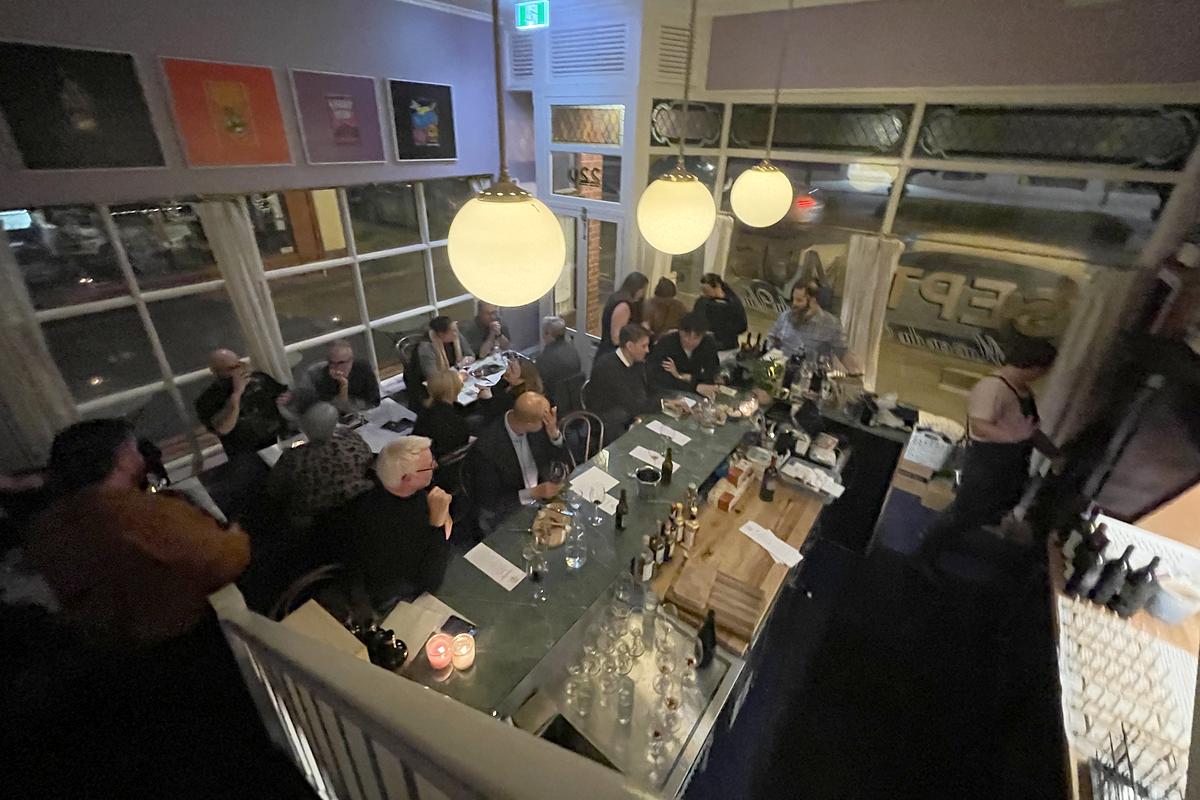
At Bar Septimus that happens at the SA Wine Options League. Six wines are poured blind: one sparkling, two whites, two reds and one special wine. For each, you choose the grape, region and vintage from four options. The grape scores 5 points, the region 3 and the vintage 2. The next night is Monday 7 December, 6:30pm to 8pm, at $40, with seats for 24.
Learn from a winemaker
A masterclass is the other half of the picture. You taste with the label on, and someone who made the wine explains why it tastes the way it does. Our Langmeil masterclass on Thursday 12 November pours six Barossa wines, with a small serve of cheese, charcuterie and crackers, for $55. Seats are limited to 24. Read our guide on what to expect from a wine masterclass in Adelaide before you go.
Practise with a glass and a board
You don’t need an event to practise. Order two wines by the glass and taste them next to each other using the four steps. Our by-the-glass list changes every week, so there is always something new to compare. Add a cheese board from the menu and notice how a hard cheese changes the way tannin feels.
Bar Septimus is at 220 Grenfell Street in Adelaide’s East End. We are open Monday and Thursday from 4pm to 9pm, Friday from 3pm to 11pm, Saturday from 12pm to 11pm and Sunday from 12pm to 9pm.
Sources
- WSET, “WSET Level 2 Award in Wines: Systematic Approach to Tasting Wine”, issue 2, May 2023.
- Bar Septimus, Wine Options League and Langmeil masterclass event pages, septimus.au, viewed 4 November 2026.
Book a table at Bar Septimus
Bar Septimus is at 220 Grenfell Street in Adelaide’s East End, with French and Australian wine by the glass and artisan cheese and charcuterie.