
Wine Regions
Rosé wine in Adelaide runs from pale, dry Provence to fresh sparkling from the Adelaide Hills. The colour in the glass says a lot about how each one was made. Here is how both places do it, and where to taste seven rosés side by side on Sunday 29 November.
How rosé gets its colour
Rosé is made from red grapes, and the colour comes from the skins. How long the juice stays in contact with those skins decides how pink the wine turns. There are four ways to do it.
Short skin contact
The grapes are crushed and the juice rests on the skins before it is drawn off and fermented. VinePair puts the range at about 6 to 48 hours, against weeks or months for a red. Longer contact gives a darker, richer rosé.
Direct pressing
The grapes go straight to the press and are made like a white wine. The juice picks up only a trace of colour, so these are the lightest rosés.
Saignée and blending
Saignée means “bleeding”. Some juice is drawn off a tank of red early on and fermented separately as rosé. Blending mixes finished red and white wine. It is banned for protected wines in Europe, with one exception: Champagne, where it is allowed and favoured for rosé.
Provence rosé: pale and dry
Provence is the reference point for pale rosé. In 2023, rosé made up 89% of the region’s AOP wine, against 6% white and 5% red, according to the Vins de Provence 2024 press kit. The leading grapes are Grenache, Cinsault, Syrah and Rolle, and Tibouren also appears in the region’s rosé.
Most producers press the grapes directly, or after a cold skin contact of 2 to 20 hours. Fermentation runs at 14 to 18°C for about ten days, and malolactic fermentation is usually blocked.
The region has three appellations. Côtes de Provence is the largest, with 73% of the vineyard and about 20,000 hectares. Coteaux d’Aix-en-Provence and Coteaux Varois en Provence make up the rest.
Adelaide Hills sparkling rosé
Closer to home, the Adelaide Hills is one of Australia’s coolest wine regions, with vineyards from 149 to 714 metres above sea level, according to Wine Australia. It is South Australia’s leading region for Pinot Noir, and its Chardonnay goes into some of the country’s best sparkling wine. The region’s Pinot Noir is also used in high-quality sparkling.
The Hills sit about 20 minutes from the city. Our guide to wine regions near Adelaide covers them alongside five others.
Where to taste rosé wine in Adelaide this November
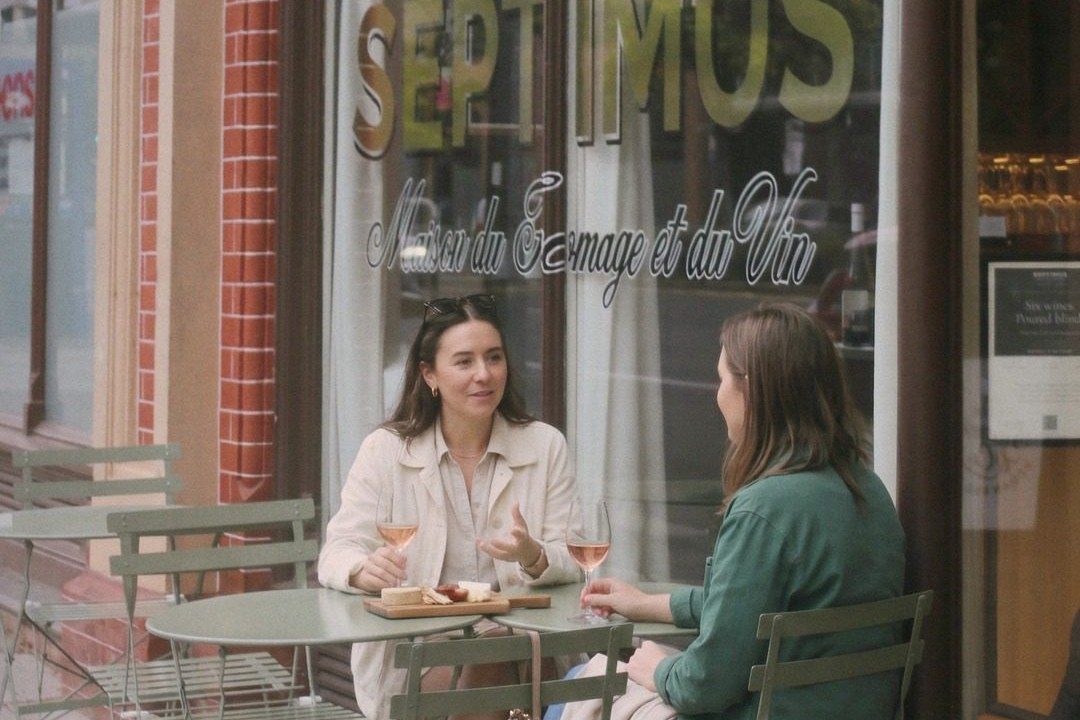
On Sunday 29 November we host the Septimus Rosé Party with Alana Kaye of The Wine Wench. She takes over the bar for the afternoon. You taste seven rosés from South Australia and France, from Adelaide Hills sparkling to Provence, with grazing food.
- When: Sunday 29 November, 2pm to 7pm.
- Tickets: $85, with fifty available.
- Format: no formal masterclass. Rosé by the glass or bottle and a pink spritz are also on offer on the day.
- Groups: for larger groups and company bookings, email hi@septimus.au.
Tasting the two styles next to each other is the quickest way to learn what each place does. For masterclasses and blind tastings through December, see what’s on.
Before the party
This weekend we are open Friday from 3pm to 11pm, Saturday from 12pm to 11pm and Sunday from 12pm to 9pm. Book a table at 220 Grenfell Street, order a cheese board and ask what is pouring by the glass this week.
Sources
- Vins de Provence, “Dossier de presse 2024” (press kit, in French), vinsdeprovence.com.
- Wine Australia, “Adelaide Hills wine region”, australianwine.com, viewed 5 November 2026.
- Courtney Schiessl, “The 4 Ways to Make Rosé”, VinePair, 13 April 2017.
- Bar Septimus, Septimus Rosé Party event page, septimus.au, viewed 5 November 2026.
Book a table at Bar Septimus
Bar Septimus is at 220 Grenfell Street in Adelaide’s East End, with French and Australian wine by the glass and artisan cheese and charcuterie.