
Wine plates
Does price change how wine tastes? The $90 label study
Perception. Study No. 2.
Label a wine $90 and people rate it more pleasant than the same wine labelled $10
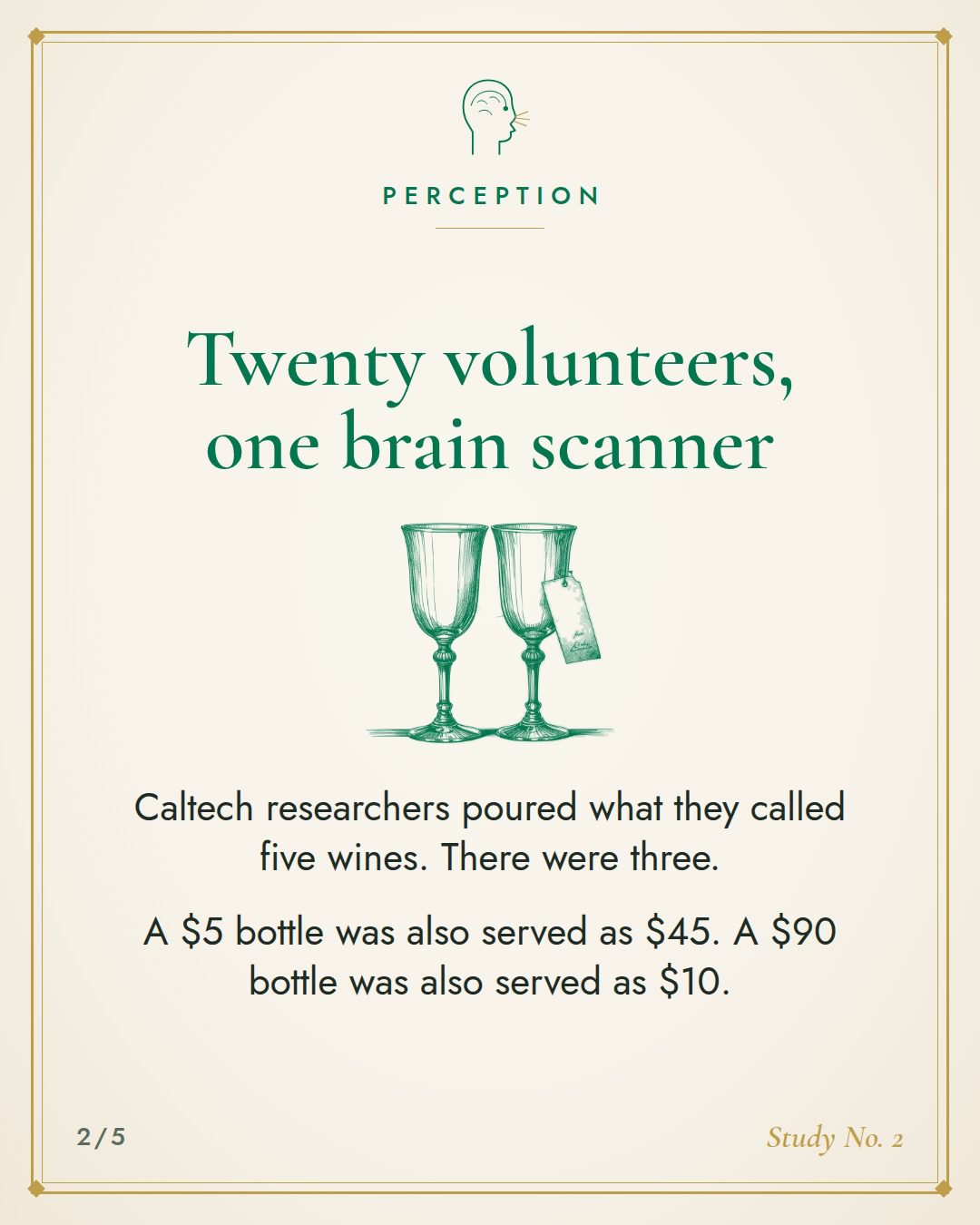
In 2008 researchers at Caltech gave 20 volunteers what they were told were five different wines, each with its price, while a brain scanner recorded their responses. There were only three wines. A $5 wine was also served as $45, and a $90 wine was also served as $10.
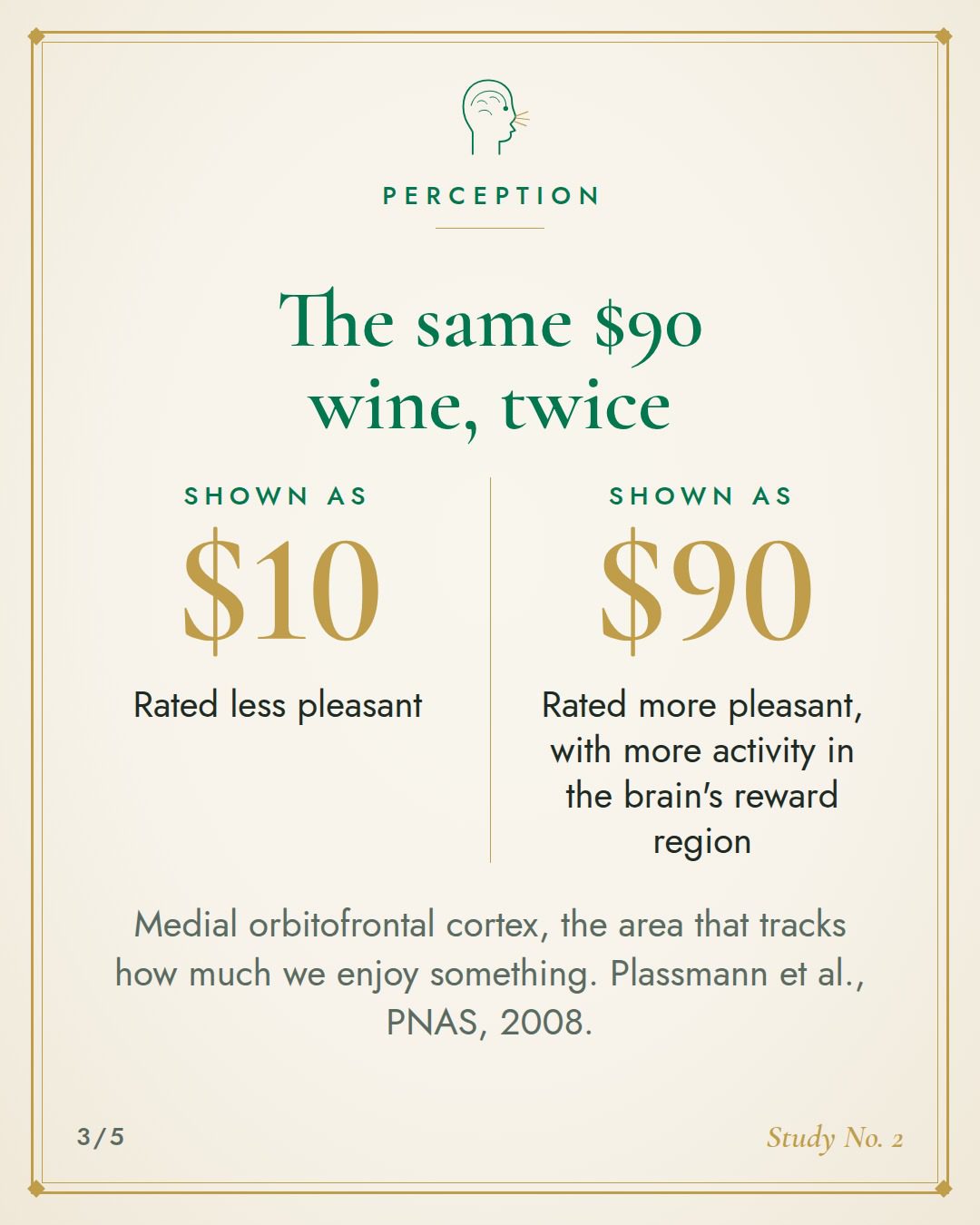
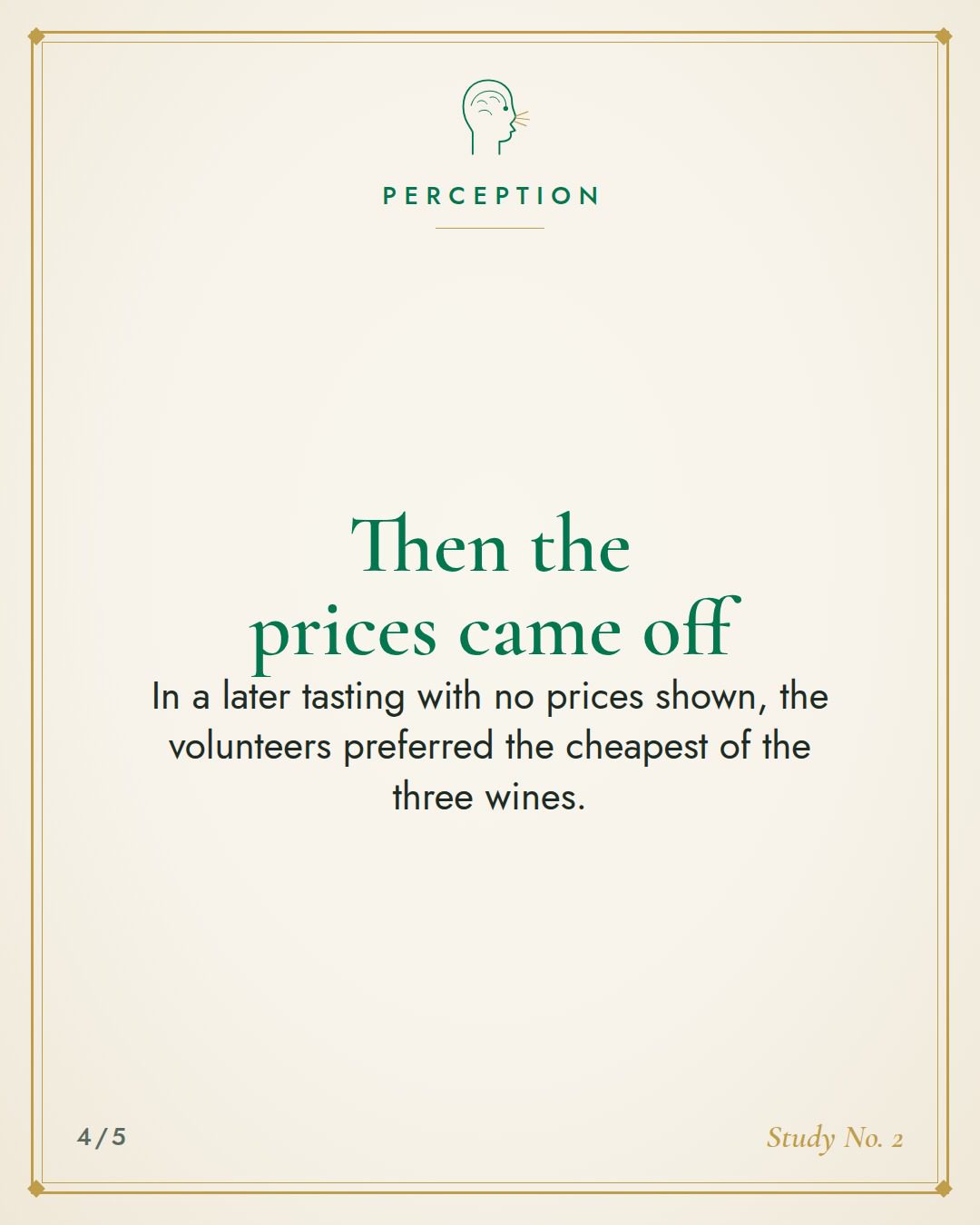
The volunteers rated the $90 wine more pleasant when it carried the $90 label. The medial orbitofrontal cortex, the part of the brain that tracks how much we enjoy something, was more active as well. In a later tasting with no prices shown, the same volunteers preferred the cheapest of the three wines.
| The wine | Label shown | Result |
|---|---|---|
| $90 bottle | $10 | Rated less pleasant |
| $90 bottle | $90 | Rated more pleasant, with more activity in the brain’s reward region |
| All three | No price | The cheapest was preferred |
The plate
Sources
- Plassmann H, O’Doherty J, Shiv B, Rangel A. “Marketing actions can modulate neural representations of experienced pleasantness.” PNAS 2008;105(3):1050–1054: pubmed.ncbi.nlm.nih.gov
- The full paper, from the Rangel lab at Caltech: rnl.caltech.edu