
Central Otago · New Zealand
A family visit to one of the World’s 50 Best Vineyards, where a prophecy delivered in 1895 waited eighty years for the right generation to act on it.
Wine writing has a well-worn habit of reaching for the word terroir the moment a vineyard has a view, as though a dramatic backdrop were itself a kind of winemaking philosophy, and after enough of these encounters a sceptic learns to discount the claim on sight. Lake Wānaka, it must be said, does not make this easy. It sits there being ludicrously beautiful regardless of what is happening in anyone’s glass, and a lesser producer could coast on the scenery alone. What separates Rippon from the postcard is that nobody there seems remotely interested in the view as a selling point. They are interested in it as an instruction manual, and by the time Nick Mills had shown us the length of the property, I had come round to thinking they might be among the very few actually reading it properly. It helps that Wānaka itself translates from Māori as a teaching place. Rarely has a name been so thoroughly earned.
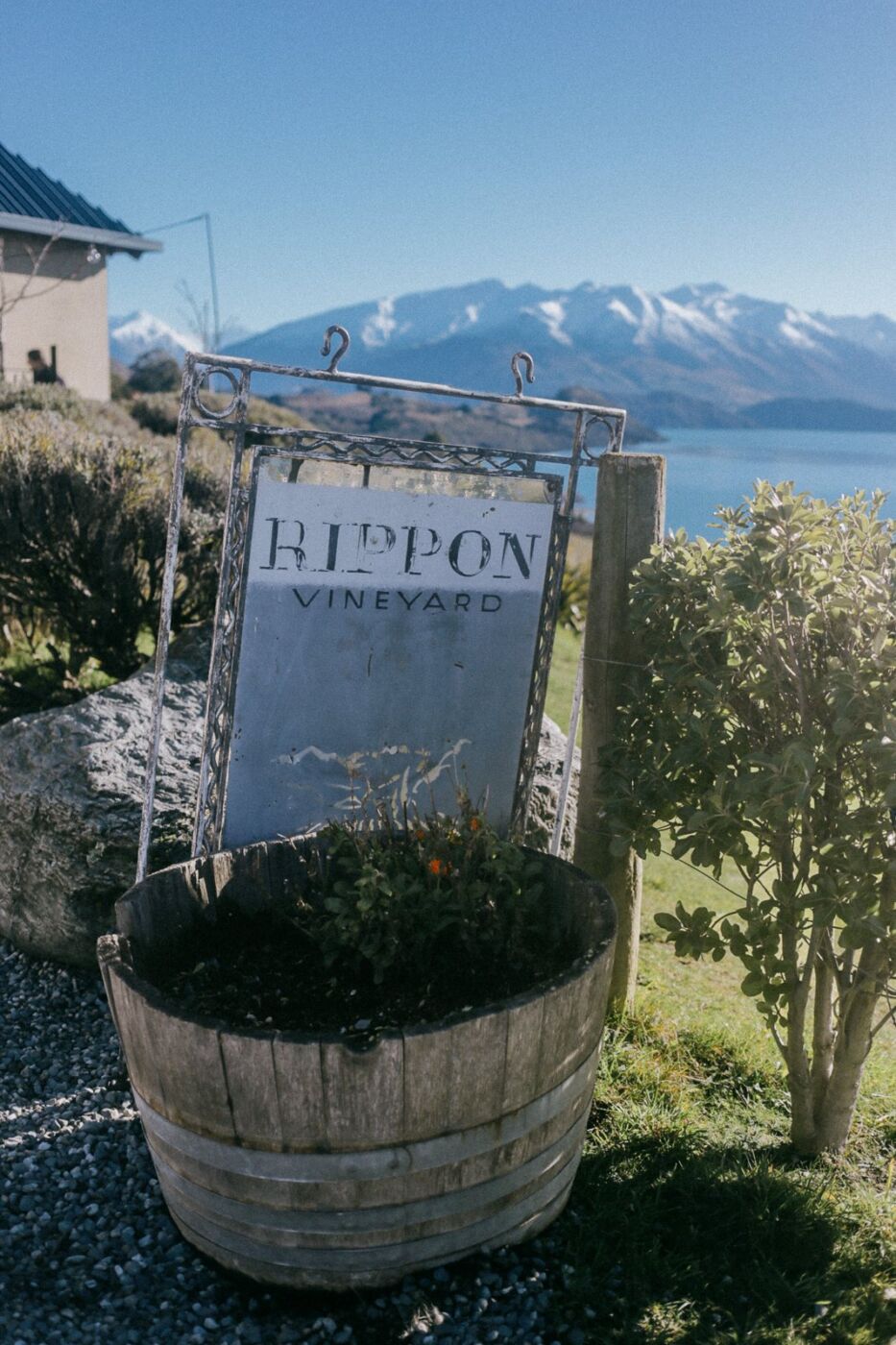
We arrived at the cellar door at half past ten in the morning to find Nick already busy at work, and a winemaker who clears a morning for you mid-week is telling you something about the day ahead before a word has been spoken. This was a family outing rather than a trade call. I was there with my mum, my sister, my brother-in-law and my nephew, who took one look at the vintage delivery truck parked outside and was lost to us entirely, and who spent the rest of the visit conducting his own parallel tour of the estate’s tractors while the adults talked about soil. We had also brought a case of Speight’s as a pre-emptive thank you, which might seem an odd offering to carry into one of the world’s great vineyards until you know the old cellar saying that it takes a lot of beer to make wine, and it is in any case a far easier gift for a wine enthusiast to give than a bottle of someone else’s wine, which arrives freighted with all sorts of accidental commentary. Nick received it in exactly that spirit, and carried himself all morning with the manner of a patient teacher rather than a proud proprietor, a rarer quality than it should be among winemakers with his kind of story to tell.
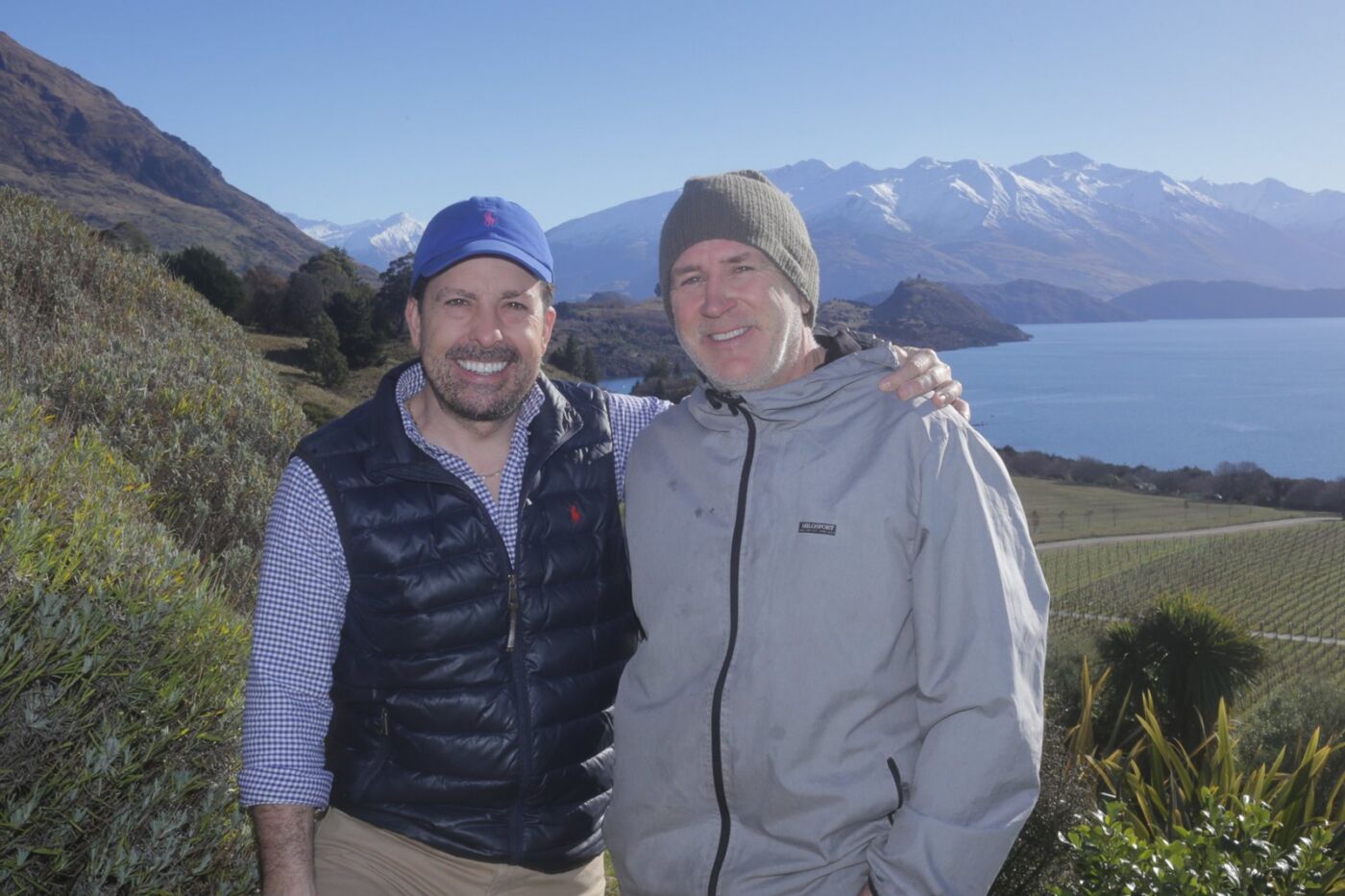
And it is quite a story. Before Burgundy claimed him, Nick was a ski racer bound for the Olympic program until his knees intervened, at which point he took the reasonable view that if the mountains would not have him one way they might have him another, and went off to learn winemaking in the Côte de Nuits, working with Alain and Sophie Meunier at Domaine JJ Confuron and with Pascal Marchand, before coming home in 2003 to take up the winemaking at Rippon. It shows, entirely free of borrowed Burgundian affectation, in the way he talks about vines as long-term relationships rather than production units.
The homestead and the prophecy
Before a glass had so much as been rinsed, we drove down to the site of the original family homestead, a detour that turns out to be as much a history lesson as a scenic one. We walked in among enormous old trees, planted by the earliest generations and now grown to a scale that makes everything human beneath them feel provisional, and it is the trees that keep the record here, because the house itself is gone. It burned down, in fact it burned down twice, and what is left now is a modest scatter of stone foundations, while the blackened trunks around them still carry the scars of the fire even where the family, sensibly, has chosen to move on. But the foundations tell you more than you might expect, because this was never a house built merely for shelter. The homestead and its gardens were designed and maintained for entertaining, laid out with gathering in mind, and in the early years that was less a luxury than a survival strategy. This was profoundly remote country then, harsh and isolating in a way that is difficult to imagine now that Wānaka has an airport and a queue for coffee, and a family alone at the end of a high country track understood that community was not something that happened to you. It was something you built, deliberately, with garden parties and open doors and the stubborn insistence that distance was no excuse for isolation.
The family story, as it happens, does not begin in New Zealand at all, and Melburnians reading this may already be several steps ahead of me. In 1830 an English draper named Frederick James Sargood married one Emma Rippon and eventually shifted the family to Melbourne, where the Sargood soft goods business grew fat on the Victorian goldrush. Their son, Frederick Thomas Sargood, did what successful colonial merchants did and, in 1868, bought a parcel of scrub in Elsternwick and built a grand house and garden upon it, naming the estate for his mother: Rippon Lea, lea being the old English word for meadow. That same Rippon Lea still stands today, heritage-listed and in the care of the National Trust, one of Melbourne’s great surviving Victorian estates. So the next time you find yourself wandering its fernery, know that you are standing in one half of a story whose other half runs down a schist hillside into Lake Wānaka, and that both halves honour the same woman.
It was one of Frederick Thomas’s sons, Percy, who carried the name across the Tasman, settling in Dunedin and, in 1912, purchasing the enormous Wānaka Station, some thirty-four thousand hectares of high country running all the way out to Albert Town and toward the Cardrona valley, taken up in the era of the old Waste Lands Act, when this whole stretch of the interior was carved into vast pastoral runs and handed to anyone prepared to gamble that stubbornness and thin soil might eventually pay off. Percy, following the family habit, named the property for his grandmother Emma, and over the generations that followed the family steadily sold, and in no small part simply gifted, land back to the growing township of Wānaka as the settlement crept up around the lake’s edge. What survives as vineyard today is a small fraction of that original run, carved from an inheritance the family chose, repeatedly, not to hoard. It is a peculiar kind of generosity to build a legacy on land you have spent a century giving away, and it tells you something about the values underneath the label before you have tasted a drop.
Here the story takes a turn that would strain credibility in fiction, because the idea of wine in Central Otago is far older than anyone standing in a modern cellar door would guess, and the family was in the room when it was first proposed. During the gold rush of the 1860s a French miner named Jean Désiré Féraud planted more than a thousand vines in the region and did well enough to win a medal for a Burgundy-style red at the 1881 Sydney International Exhibition, before the industry he tried to start simply evaporated behind him. Then, on 2 May 1895, an Italian-trained viticulturist named Romeo Bragato, brought out by the New Zealand government to assess the country’s winegrowing potential, stood before the Otago Chamber of Commerce and declared himself astonished at how well Burgundy-style grapes could grow in Central Otago, pronouncing the region pre-eminently suitable and going as far as to claim there was no country on the face of the earth that could produce better. And here is the detail that stops you: years later, Nick’s mother Lois, going through old family letters written in 1895, found mention of a Bragato lecture on planting vines in Central Otago, and evidence that Percy, then busy with the railways, had actually run the numbers on the financial feasibility of viticulture. The prophecy, in other words, reached well beyond the district. It was delivered to the family, weighed, and filed away, where it sat for the better part of eighty years while the entire region concluded that Bragato had been wrong and got on with sheep.
Because that was the settled position for most of a century: too cold, too high, too far south. It became one of those pieces of received wisdom that hardens precisely because nobody tests it, and it took Nick’s father Rolfe, a third-generation high-country farmer and wartime submarine lieutenant who had seen the schist-terraced vineyards of Portugal’s Douro Valley during his service off the Portuguese coast and never quite shaken the resemblance to the slopes back home, to finally put it to the question. He began planting experimentally in 1975, drawing on a list of around thirty cool-climate varieties recommended by the Te Kauwhata viticultural research station, at a time when there was next to nothing in the ground south of Christchurch. He planted small quantities of nearly everything he could lay hands on, kept what thrived without needing to be pushed and pulled into shape, committed the first commercial block in 1982 and released the first vintage in 1989. The scepticism outlived even that: as late as 1993 the wine writer Michael Cooper was still openly questioning whether the region was warm enough to support commercial wineries, by which point Rippon’s 1992 Pinot Noir was on its way to being named Best Red Wine at the New Zealand Wine Show, an answer delivered with about as much finality as the question allowed. Bragato, it turned out, had simply been ninety years early, and it took the family that heard him first to prove him right.
That habit of keeping what the land approved of and discarding the rest became, in effect, the founding method of the whole vineyard. Much of Rippon’s plant material has come from massal selection ever since, propagated from the estate’s own best performing vines across generations rather than sourced as a single uniform clone, a population of vines that has spent five decades quietly auditioning itself against this exact hillside. The vines grow ungrafted on their own roots, rare within Central Otago and remarkable anywhere in the New World, and are farmed without irrigation, which in a climate this marginal amounts to a standing act of trust between the family and the ground.
Schist, glaciers and ungrafted vines
Geologically the site is almost showing off. Wānaka sits close to where the Pacific and Australian plates continue their slow, ongoing argument, the same collision that lifted the Southern Alps and, on a rather more intimate scale, folded and fractured the schist beneath Rippon’s rows into soils that drain hard and offer the vine very little in the way of comfort. The lake does the rest, moderating the harsh continental swings of the basin just enough to keep the whole improbable exercise viable. Nick talks about this difficulty the way a good cook talks about a stubborn ingredient, with genuine affection rather than complaint, on the understanding that ease is rarely where interesting wine comes from.
Through the vines to the barrel room
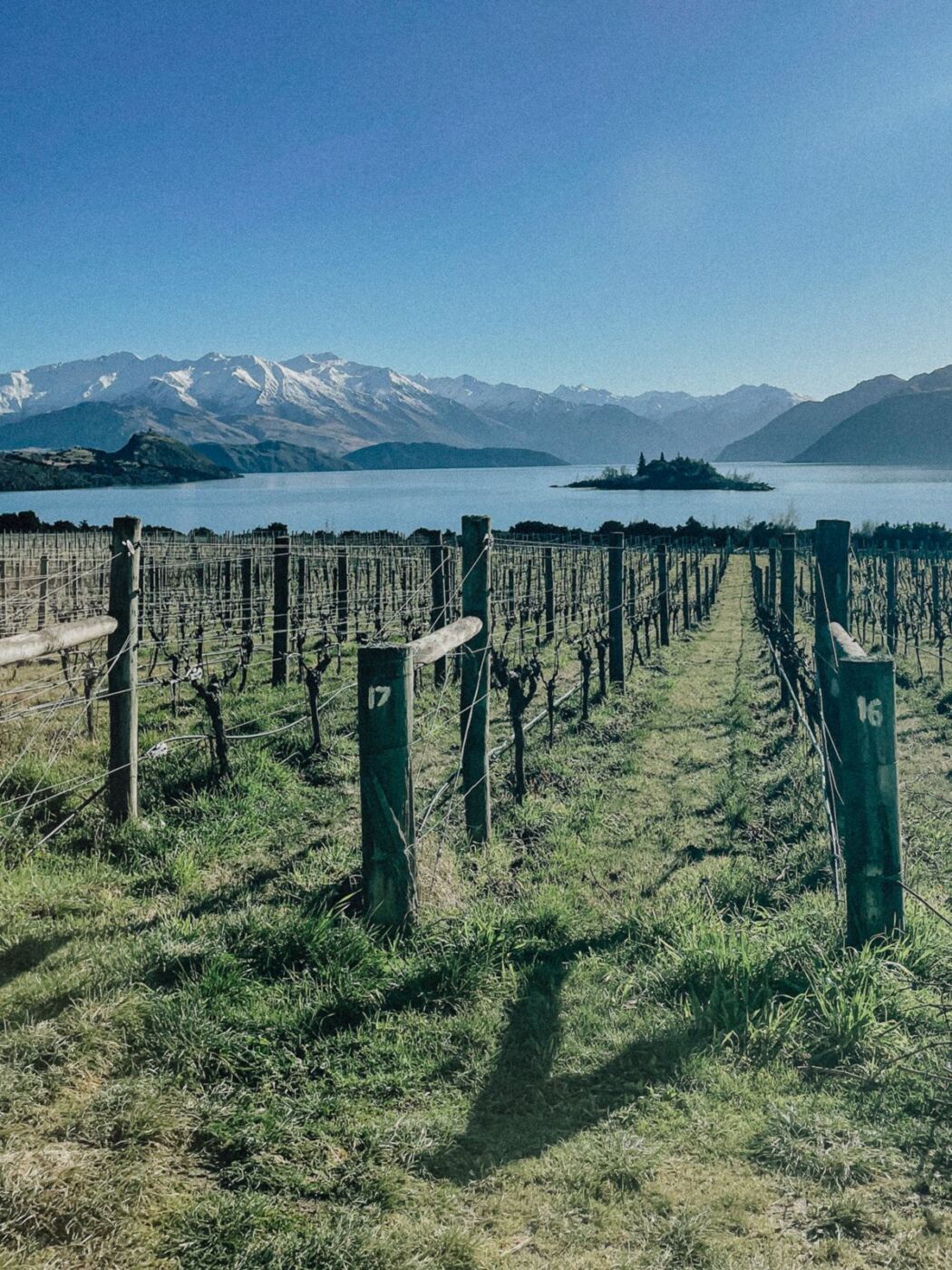
From the homestead, then, with a century and a half of that history rattling around the car with us, we drove in at the bottom of the vineyard, entering the property the way the land itself is organised, from the lake upward. The route took us past Emma’s Block, sitting low and close against the water, of which more shortly, and then to a stop where we met the vineyard manager, who was working the winter rows and greeted the delivery of cold beers with the unfeigned delight of someone being handed exactly the right thing at what was, it must be said, still well before lunchtime. Nobody involved seemed to regard this as remarkable. Vineyard work in a Central Otago winter is its own justification for most things. We carried on around the bottom of the property and then climbed back up through the vines past the Tinker’s Field plot, the estate’s oldest plantings, named for Rolfe himself, Tink to his friends, tracing in a single slow loop the whole geography we would shortly be tasting glass by glass.
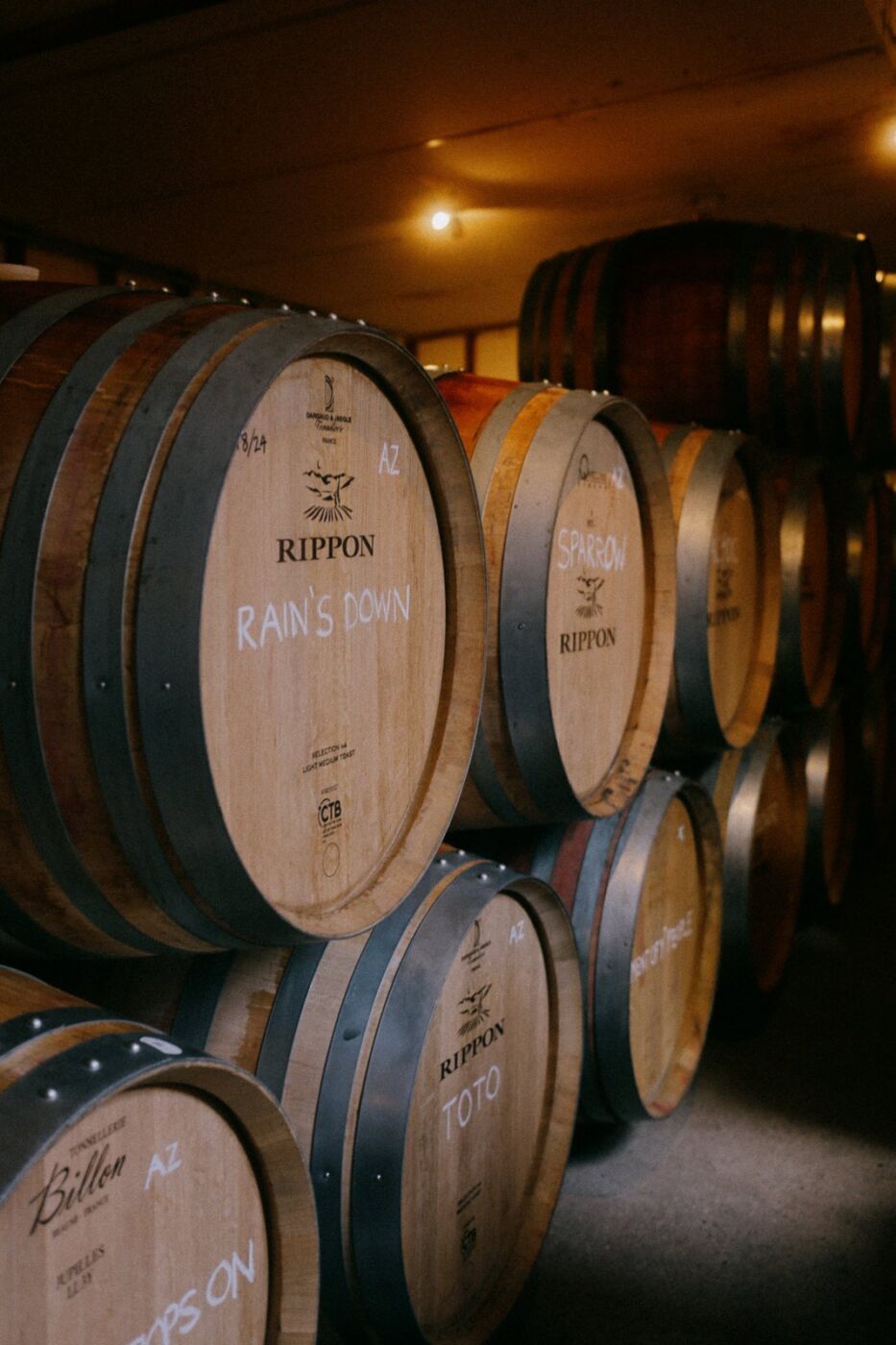
The loop delivered us to the winery and barrel room, and this is where the estate’s history stops being a story and becomes something you can put your hand on. These are working farm buildings first and winery second, extended in stages over the decades but with the bones of what looked to us like 1920s or 30s farm construction still plainly visible, the kind of honest utility that predates any thought of wine. Deep in the original barrel room, the early prices are still written on the wall from the years when there was no cellar door at all and people simply drove out to the farm to buy the young vintages straight from the winery, an era Nick remembers well, since it began with the family garage filling up with unlabelled bottles until his mother bought trestle tables and a till and the operation went, in the loosest possible sense, retail. The prices on that wall are a museum exhibit nobody bothered to frame, which is very much the house style. Around us, the chalked names on the barrel heads read like an inside joke passed down through a family that clearly does not take itself too seriously even while taking the work extremely seriously. Rain’s Down. Sparrow. Toto. Small, human, faintly ridiculous names on vessels holding something the family plainly regards as considerably larger than themselves.
And then there is the laboratory, which may be my favourite room in New Zealand wine. It is small and strictly functional, a former goat pen with one of those stable doors that opens at the top or the bottom, and when Nick demonstrated that the door still works exactly as a goat-era door should, opening the top half with a flourish, my nephew was returned to us from the tractors for the single most delighted moment of his morning. This is the goat shed that, in the family telling, turned winery and then cellar and cellar door as Rippon Farm became Rippon Vineyard and Winery, and it has never bothered to disguise its origins. It has also, it should be said, one of the finest views of any laboratory on earth, looking straight out over the lake, so that whoever is running the numbers on a ferment does so with Ruby Island and the Southern Alps for company. Most wineries build their best view into the tasting room. Rippon appears to have given it to the person doing the titrations, which tells you a great deal about where the priorities lie.
At the tasting bench
We eventually made it back to the cellar door, which deserves a word of its own. It is a genuinely lovely room, cosy in the way of a good alpine chalet, all warm timber and low winter light, with the lake and the vines finding their way in through every available vantage point as though the architecture had been designed less to frame the view than to surrender to it. We tasted at a long timber bench with the lake doing its considerable best to steal focus from what was in front of us, and Nick lined up a generous sweep of the estate, opening with the Sauvignon Blanc, then moving through the Pinots, the Mature Vine in both the 2022 and 2023 vintages, Tinker’s Field from the same pair of years, Emma’s Block, and a 2016 pulled from the library, before closing the tasting with the Riesling.
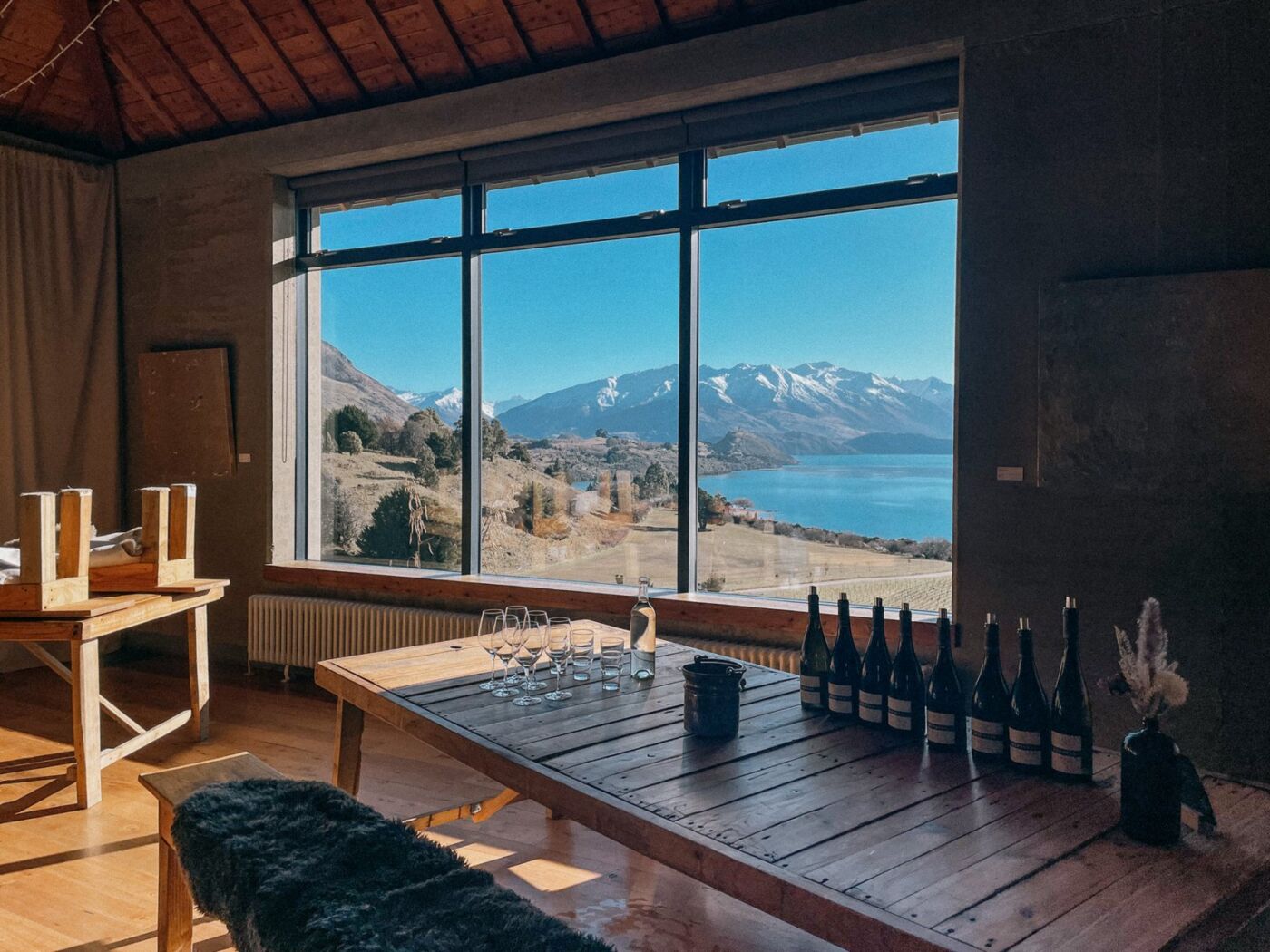
The 2022 Mature Vine led off the reds and it is drinking beautifully right now, strawberries and cream on the nose, spice and white pepper across the tongue, and a long, composed finish that set the standard for everything that followed. 2022 was a warmer year here, and it shows in the wine’s early generosity, the kind of vintage that meets you halfway. The 2023 alongside it showed the same coiled, unhurried quality with a touch more reserve, the kind of wine that makes conversation drop away mid-sentence, while the two Tinker’s Fields, from the plot we had climbed past barely an hour earlier, carried the savoury depth and structure that only come from vines that have stopped trying to prove anything. The revelation of the older material was the 2016, a wine coming properly on song: leaning easily into its tertiary characters yet with the fruit still firmly in charge, tannins softening into place, and the acid holding the whole thing together with real power. It has another ten years in it without breaking stride. That acidity is the quiet constant across the entire lineup, and Nick made the point plainly: in this climate, acid is never an issue. The cold nights see to it, which is why these wines can afford to be patient in a way that warmer regions simply cannot.
“In this climate, acid is never an issue. The cold nights see to it.”Nick Mills, Rippon
But the wine of the day, by some distance, was the Emma’s Block 2023. The block itself is a study in compensation: named, like the estate itself and its Melbourne cousin, for the family matriarch Emma Rippon, it receives the least sun of any parcel on the property, a handicap that would sink a lesser site. What saves it, and more than saves it, is its position hard against the lake, close enough for that great body of water to wrap the vines in its moderating influence, softening the frosts, extending the season, letting the fruit inch toward ripeness on its own patient schedule. The result in the glass was the most complete wine we tasted all morning. Nuanced and spicy, genuinely complex, with a crunch of green herbs running through it that kept the whole thing taut, silky tannins sitting more forward and assured than in its stablemates, and a shape and savour that had everyone at the table reaching, inevitably, for the same word: Burgundian. It is the sort of wine that makes the case for single-site bottling better than any argument could, a parcel with a disadvantage that turns out, on this evidence, to be a personality.
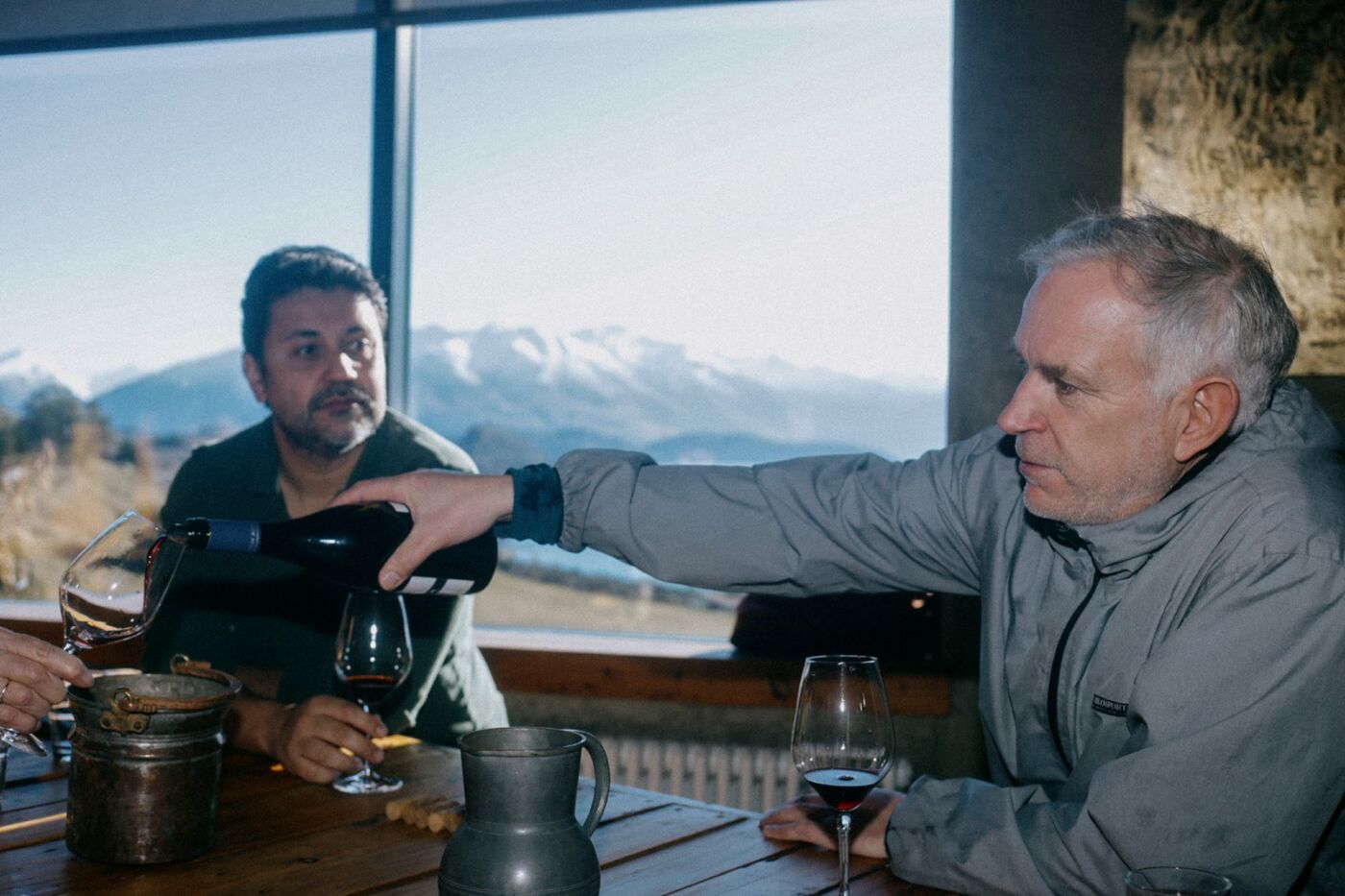
The whites merit more than a footnote, because they bookended the tasting and they tell you something about the estate that the Pinots alone cannot. The 2023 Sauvignon Blanc opened proceedings, and it announces within one swirl that it wants nothing to do with the Marlborough template. This is Sauvignon Blanc as texture and complexity rather than fruit-bomb exuberance: mineral and stony at its core, threaded with herbs, savoury and structured in a way the variety is rarely allowed to be in this country. The winemaking explains it. The fruit comes off vines planted in the late eighties and early nineties, is foot-stomped and given time on skins before pressing, and roughly half the juice ferments in old French barrels, chosen, as the family puts it, for the form of the vessel rather than the flavour of the wood, with the texture built through long lees contact across slow wild ferments. The result reads more like a savoury white from the Loire than anything the export machine has taught the world to expect from these two words on a label. The Riesling closed the tasting, and it is a serious piece of work in its own right, a dry, German-styled wine of texture and structure that has earned itself a place among the global reference points for the variety, reviewed these days alongside the benchmarks rather than beneath them. Finishing on it, rather than leading with it, felt like a quiet statement of confidence, the sort of wine an estate pours when it knows the last impression will hold.
Both varieties are survivors of Rolfe’s original grand experiment: of the twenty-five varieties he planted in those early speculative years, only six proved themselves genuinely suited to the site, and Sauvignon Blanc and Riesling made the cut alongside Pinot Noir, Gamay, Gewürztraminer and the gloriously obscure Osteiner. But change is always afoot in the vines here, because a vineyard that listens to its land this closely must also be prepared to act on what it hears, and some parcels of Sauvignon Blanc and Riesling are gradually being swapped out for Pinot Noir as the family continues refining the match between variety and ground. Nick was candid about the commercial reality sitting underneath that decision, at least where the Sauvignon Blanc is concerned, and he was equally clear that none of it reflects on the wine itself. Every bit as much work and craft goes into Rippon’s Sauvignon Blanc as into the Pinots, the same hand-tending, the same biodynamic discipline, the same patient winemaking. The trouble lies with the ceiling, because the world decided long ago what it is prepared to pay for a New Zealand Sauvignon Blanc, and that number was set by an ocean of cheerful, competent Marlborough wine that bears no resemblance to what happens on this hillside. When the market caps the price of a wine regardless of what went into it, the arithmetic eventually asserts itself, and a row of Sauvignon Blanc becomes a row of Pinot in waiting. It is a rare moment of commercial candour from a producer who mostly talks in decades, and all the more credible for it.
How Rippon is farmed
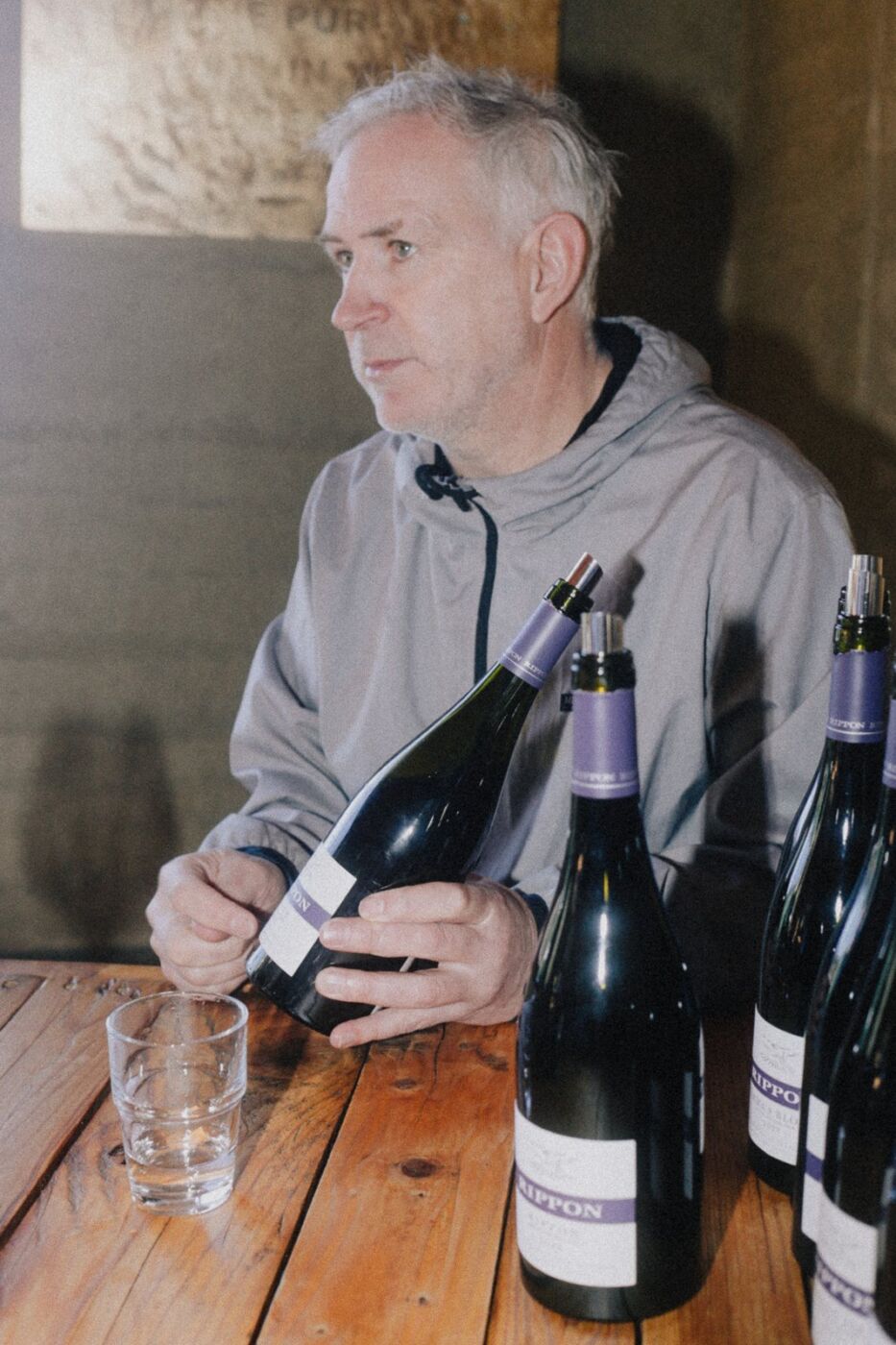
Rippon has been farmed organically and biodynamically for years now, certified through both BioGro and Demeter, and Nick discusses it with a refreshing absence of mysticism, treating the biodynamic calendar less as doctrine and more as a discipline that forces closer attention to the season than a conventional spray program would ever demand. It is conviction built on evidence rather than faith: it was in the biodynamic domaines of Burgundy that he first saw the difference the approach made in the vines and soils, and he brought that conviction home with him. Pruning begins at the winter solstice, the shortest and darkest day of the year, when the vine is at its most dormant and the shape decided for it will echo through everything the following season produces. The guiding question, as Nick put it, is rarely what the market wants or what would be most convenient, but what Rippon itself would want, as though the vineyard were a quiet, opinionated stakeholder in its own future rather than a passive input to be managed. He does not see himself as a creator so much as an intermediary, someone helping a particular piece of land say what it has evidently been trying to say since well before anyone thought to plant grapes on it.
That same instinct extends past the vine rows entirely. The family has spent years reintroducing indigenous plantings around the property, coaxing back pockets of the native landscape that a century of farming had pushed out, on the theory that a vineyard surrounded by a functioning ecosystem will always have more to say than one farmed in isolation. Even the label carries the same habit of noticing. The Rippon logo was drawn by friends of Nick’s parents, and the purple band across it is not a design flourish so much as a small act of observation, lifted directly from the colour that settles over the mid-mountain slopes across the lake as the sun goes down. A label, in other words, that simply describes what was already there, for anyone who thought to look up.
And the old homestead’s philosophy of gathering has not gone anywhere either. It has simply changed address. The Rippon Hall, which stands atop the hill above the vines, took some thirty years of dreaming and planning to bring into existence, and it is quite literally built from the place it serves: walls of compacted earth dug from the Rippon hillside, trusses and beams cut from the estate’s own larch forest, and a boiler warming the whole building with wood taken from the farm. Today the Hall hosts weddings in the natural amphitheatre overlooking the lake, community gatherings, concerts, workshops, and a rotating cast of guest chefs, including a winter pop-up restaurant that has become something of a local institution. There are plans to extend the footprint further when time and money permit, and the family seems entirely unhurried about it, on the sensible grounds that winemaking is an art and a business that rewards time and consistency far more reliably than it rewards haste. A century and a bit after those first garden parties at the homestead, the family is still doing the same essential thing: building rooms for people to gather in, at the end of the same track.
The community operates inside the business as much as around it. Rippon’s remoteness means it cannot run on the fly-in casual labour model that props up so many Australian wineries, and so the estate carries an unusually high number of full-time staff who work the vines, run the cellar door, run the winery, and pitch into every facet of the operation as the season demands. Extra hands are brought in only for the crunch periods of pruning and harvest, and even then, Nick told us, the estate does not simply take whoever is passing through. The winter pruning crews include experienced hands from overseas, France among them, people who understand that every cut of the secateurs is a decision about the health and longevity of a plant the family intends to be farming in fifty years. It is a natural extension of a relationship that runs both ways: Nick’s own formation happened in Burgundy, he trained in biodynamics under the French consultant Pierre Masson, and he has been a driving force behind the Burgundy Exchange, the program that swaps young vignerons between Central Otago and the Côte d’Or, work that earned him the Leadership Award at the 2022 New Zealand Winemaker of the Year Awards. Technical brilliance and tradition operate here as a single value, applied at different timescales. And there is accommodation on site, so the people who tend the place can actually live within it. It is one thing to talk about a farm as a living whole. It is another to house the people who make it one.
The scoreboard catches up
The scoreboard, for those who keep one, has caught up with all of this in emphatic fashion. Wine-Searcher’s roll call of the best New Zealand wines for 2025 placed Tinker’s Field Mature Vine Pinot Noir at number one, the best wine in the country outright, with Emma’s Block also inside the top ten, meaning the two single blocks we tasted that morning currently form one of the more remarkable double acts in the country’s fine wine landscape. James Suckling has gone further still, awarding a perfect one hundred points to a late release of the 2010 Mature Vine Pinot Noir and calling it an important moment in the story of New Zealand wine, while the Tinker’s Field 2023 was the highest-placed Pinot in his most recent Top 100 Wines of New Zealand. Decanter, the Wine Advocate and the rest of the critical establishment have been circling the estate with scores in the mid-nineties for years, and that quiet, German-styled Riesling we tasted is now routinely reviewed alongside the global benchmarks of the variety. The family, characteristically, does not lead with any of this. You have to go looking for it, which is of course exactly the correct attitude for a producer whose entire philosophy holds that the wine is a report on the land rather than a bid for applause.

Rippon was also named among the World’s 50 Best Vineyards for 2025, an accolade that felt almost incidental by the time we left, the sort of recognition that tends to find places that were never chasing it. What stays with me is the method rather than the medal: a family that carried one woman’s name from Surrey to Melbourne to the shores of Lake Wānaka, heard a prophecy in 1895 and waited eighty years for the right generation to act on it, rebuilt twice after fire, gave most of a thirty-four-thousand-hectare station back to the town that grew around it, planted vines when everyone said nothing would grow, built a hall out of the hillside so the district would always have somewhere to gather, and has spent generations asking a piece of land what it wants before deciding what to put in it.
And in the end the wines and the philosophy turn out to be the same thing, expressed at different speeds. A 2016 that will cruise for another decade on its acid line, a lowly lit lakeside block producing the wine of the morning, a Sauvignon Blanc made with flagship care regardless of what the market will pay for it: each one is the taste of a decision made patiently, by people thinking in generations, on land they regard as the senior partner. You can drink the family’s values here, glass by glass, which is a rarer experience than the wine world likes to admit. Rippon does both the asking and the answering, without apparent effort, which is usually the surest sign that a great deal of effort has gone into it.
Come and taste it
Bar Septimus pours French and Australian wine by the glass alongside artisan cheese and charcuterie at 220 Grenfell Street, Adelaide East End.